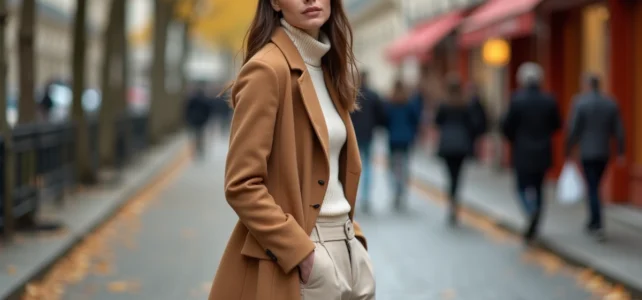
The autumn-winter 2026-2027 fashion shows have delivered their proposals. Between bold colors, the return of slim jeans, and monochrome silhouettes, the collections presented in Milan and Paris outline a season where the wardrobe tightens around a few strong pieces. Not all trends spotted on the catwalk translate the same way into a daily wardrobe, and it’s precisely this gap that deserves examination.
Runway trend vs. wearable piece: the filter to apply before buying
Each season produces around twenty micro-trends. The majority disappear before January. To distinguish a true durable piece from a visual flash, a simple criterion works: a trend that is interpreted by at least three brands at very different price points is likely to last.
All-red outfits, for example, were presented as complete silhouettes “from head to toe” during the AW 2026-2027 shows, according to Marie Claire. It’s no longer just a touch of color on an accessory. It’s a wardrobe choice. The question to ask: do you already own a bottom or a top in this color range that could serve as a base, or do you need to start from scratch?
Conversely, some spectacular proposals on the catwalks (extreme volumes, complex layering) remain confined to editorial use. A piece that is practical for everyday wear should be styled with at least three different outfits already present in your wardrobe. If this test fails, the trend will cost you more than it brings.
To follow the evolution of collections and spot pieces that transition from the runway to the racks, the fashion news on DLG Fashion allows for comparison of proposals from several brands in the same season.
Autumn-winter 2026 fashion colors: total red, bright yellow, and more

Two chromatic directions dominate this season, and they do not play the same role in a wardrobe.
Red establishes itself as a complete silhouette color, not as an accent. Marie Claire documents this orientation in the AW 2026-2027 collections: coats, trousers, dresses, red is worn in blocks. For this to work in everyday life, it’s better to start with a single structured piece (a coat, tailored trousers) and combine it with neutrals.
Bright yellow, identified as a stylistic response to a context perceived as gloomy, comes in butter, mustard, and chick yellow. Collections use it as a “source of light,” according to the analysis relayed by Marie Claire. The softer variations (butter, mustard) are easier to integrate than bright yellow, which requires a specific complexion and clothing context.
- Total red: prioritize a structured piece (blazer, straight trousers) rather than a complete set for the first purchase
- Butter or mustard yellow: works in knit or as an accessory without destabilizing a sober outfit
- Bright yellow (chick): spectacular in photos, harder to wear without coordinated accessories
Warm tones and bright shades coexist this season, but their longevity in wardrobes will depend on their ability to blend into everyday looks, not their impact on Instagram.
Return of slim jeans: a real material shift for the season
After several seasons dominated by wide cuts, barrel, and bootcut, slim jeans are making a comeback in the autumn-winter 2026 collections. FashionUnited France presents this movement as a shift towards more sophisticated silhouettes in ready-to-wear. Harper’s Bazaar Germany particularly emphasizes this direction.
This shift does not mean that wide trousers will disappear. Both cuts will coexist on the racks. However, the slim fit regains a legitimacy it had lost, especially when worn with high boots or structured heeled booties.
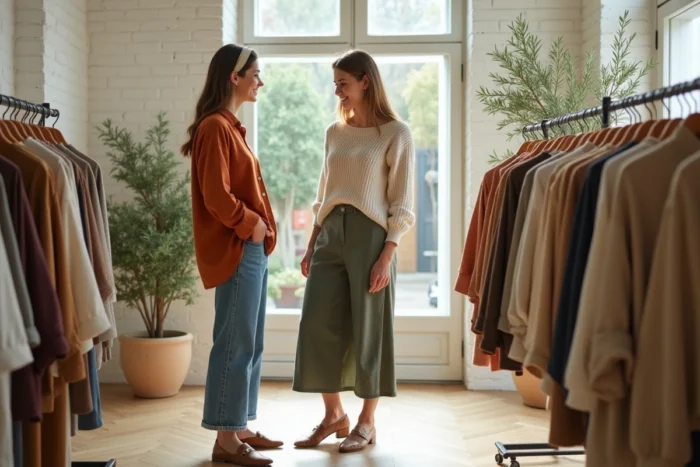
The difference with the slim jeans of the 2010s lies in the material. Current denims incorporate more elastane and denser weaves, which changes the drape and comfort. The 2026 slim focuses on a fitted cut without compression, often with a higher waist than the previous version.
For those who have invested in wide jeans in recent seasons, the slim does not render these pieces obsolete. It is a complement, not a replacement. A functional wardrobe can accommodate both cuts without contradiction.
Building a seasonal wardrobe without buying everything new
The temptation to renew an entire wardrobe with each new season is fueled by the pace of fashion publications. However, the autumn-winter 2026-2027 trends allow for a more targeted approach.
- Identify the piece that you truly lack: if you have no garments in reds or yellows, a single well-chosen purchase is enough to refresh several outfits
- Test the slim jeans with an entry-level model before investing in a premium cut, especially if your wardrobe is built around wide silhouettes
- Evaluate each trend based on the number of combinations it allows with your existing pieces, not just its isolated visual impact
- Resist “statement” pieces that only work with one outfit or context
Three to four well-chosen pieces per season are enough to refresh a wardrobe without destabilizing it. The rest is a matter of occasional pleasure, not wardrobe necessity.
The AW 2026-2027 collections confirm a clear direction: bold colors worn in blocks, a return to more fitted cuts, and a denim material that is becoming more sophisticated. The available data does not yet allow for measuring which of these orientations will establish themselves sustainably beyond the season. The best indicator will remain the speed at which these pieces appear in second-hand markets, a sign that they were purchased and then abandoned, or conversely, retained.