
A LPDD advisory sheet is a concise document that compiles reliability, maintenance, and budget data associated with a specific car model, for a given generation. Published by LPDD Conseil (Le Point De Départ), these sheets combine feedback from independent workshops, expert assessments, and field surveys to provide a summary that is understandable to a non-specialist. Their purpose is to provide a factual foundation before any purchase, especially in the used car market.
Building your shortlist of models using the LPDD sheet
The most profitable use of an LPDD advisory sheet occurs before searching for listings. Consulting the sheet before browsing Leboncoin or La Centrale allows you to define a precise specifications document: recommended engines, vintages to prioritize, variants to exclude.
This approach reverses the usual logic. Instead of spotting an attractive listing and then checking if the model is reliable, the sheet serves to filter models even before looking at prices. The risk of becoming attached to a problematic vehicle decreases significantly.
Each sheet details recurring breakdowns, known mechanical weaknesses, and maintenance costs by engine type. By cross-referencing these elements, it becomes possible to eliminate a diesel version prone to injection issues or to favor a gasoline engine reputed to be more robust on the same model. The information compiled in the LPDD advisory sheet on Automotech explains how to read this cross-referenced data.
Reading an LPDD reliability sheet: sections to decipher

An LPDD sheet is structured around several distinct blocks. Understanding their logic prevents you from getting lost in the data and allows you to go straight to the information useful for your situation.
Mechanical reliability block
This block lists the components to monitor: engine, gearbox, timing belt, turbo, injection system. Each identified weak point is accompanied by an indication of the frequency of the problem and the mileage at which it typically appears. An engine flagged as fragile regarding the timing belt warrants a check of the maintenance log before any purchase.
Maintenance and projected costs block
This section lists common operations (oil change, brakes, timing belt) and their estimated costs. The interest lies in the gap between the official pricing grids from the manufacturer and the actual prices in independent workshops. Actual maintenance costs often deviate from the manufacturer’s grids, sometimes significantly depending on the models.
Overall budget block
The overall budget includes depreciation, typical insurance, fuel consumption, and maintenance over a given period. This consolidated view allows for comparing two competing models not just on their purchase price alone, but on their actual ownership cost. A vehicle cheaper to buy may turn out to be more expensive over three years if its spare parts are costly.
Using the LPDD sheet as a negotiation lever
Beyond model selection, the LPDD advisory sheet serves as a negotiation tool with the seller, whether private or professional. The data on recurring breakdowns serves as concrete evidence to discuss the price.
If the sheet indicates that a specific model suffers from a known clutch defect starting at a certain mileage, and the desired vehicle approaches this threshold, this information justifies an additional discount. The seller cannot dismiss a documented problem supported by feedback from workshops and field data.
The approach works in three steps:
- Identify on the sheet the weak points associated with the mileage and year of the targeted vehicle
- Check during the inspection if the corresponding preventive repairs are noted in the maintenance log
- Estimate the cost of the repair if it has not been done, and include it in the price discussion
This method transforms a vague impression (“this model has a bad reputation”) into a factual and quantifiable argument that the seller can hardly contest.
Cross-referencing the LPDD sheet with other sources before purchase
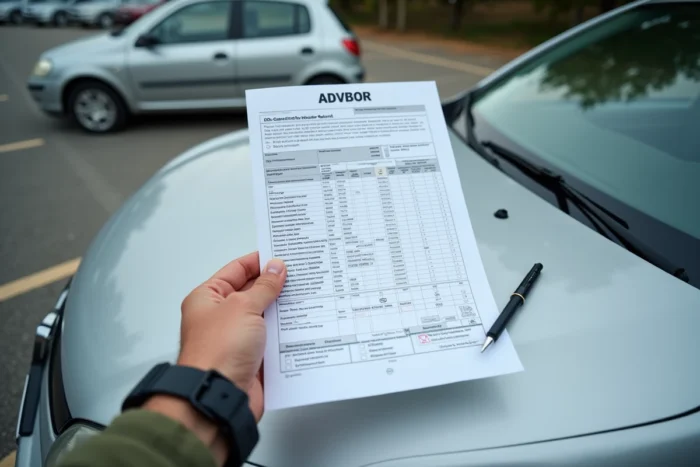
An LPDD sheet provides a solid starting point, but it benefits from being supplemented by other checks. Cross-referencing multiple sources reduces the blind spots that a single database may leave.
- The technical inspection report of the targeted vehicle, which notes defects observed during the physical examination (braking, pollution, lighting, corrosion)
- The maintenance history provided by the seller, to be compared with the recommended maintenance intervals in the sheet
- Specialized forums by model, where owners report issues that may be too recent to appear in statistical databases
- Official manufacturer recalls, available on brand websites or through dedicated platforms
The LPDD sheet highlights underlying trends on a model. The technical inspection and the maintenance log, on the other hand, tell the individual story of the vehicle you are examining. Both levels of information are complementary, not interchangeable.
A model deemed reliable according to the sheet may have been poorly maintained by its owner. Conversely, a model flagged as fragile regarding a specific component may have received the corresponding preventive repair, which radically changes the situation. The statistical reliability of a model does not replace the inspection of the individual vehicle.
Consulting the sheet in advance, negotiating with the data in hand, and then validating through a physical and documentary examination: this sequence remains the most effective way to limit unpleasant surprises in the used car market.