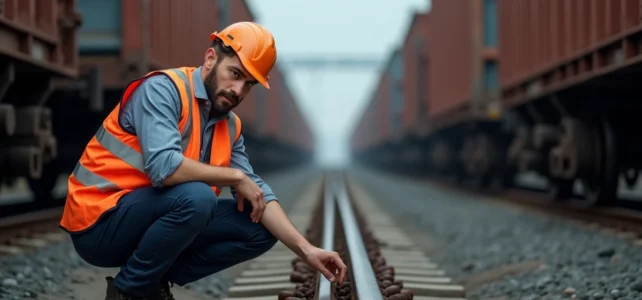
What skills separate an operational wagonist from a professional capable of managing the current demands of rail freight? The job is based on a stable technical foundation (braking, coupling, visual inspection), but the dual ecological and digital transition of the sector reshapes the expected profile. This article measures the gap between the historical skills of the position and those that rail operators are looking for today.
Digital skills of the wagonist in relation to field requirements
Most job descriptions depict the wagonist through their mechanical actions: checking braking systems, inspecting axle conditions, maneuvering wagons on sorting tracks. These skills remain the core of the position.
The report “Skills and Jobs of the Future – France 2030” indicates a rise in the use of connected tools and smart sensors in maintenance and rail operations. For the wagonist, this translates into the use of traffic management software and onboard diagnostic systems.
The difference from the profiles sought ten years ago lies in this digital layer. A wagonist who can interpret data from a temperature sensor on an axle or input information into a real-time tracking software gains autonomy in diagnosing anomalies. To better understand the essential skills of the wagonist, it is therefore necessary to integrate this data dimension into traditional mechanical know-how.
| Area of expertise | Historical foundation | Current requirement (digital transition) |
|---|---|---|
| Inspection of wagons | Visual control, manual brake testing | Reading smart sensors, assisted diagnostics |
| Operation tracking | Paper forms, radio communication | Data entry on rail traffic management terminals |
| Anomaly detection | Sensorial experience (noise, vibration) | Interpretation of predictive maintenance data |
| Logistical coordination | Oral instructions, track signage | Digital tools for real-time supervision |
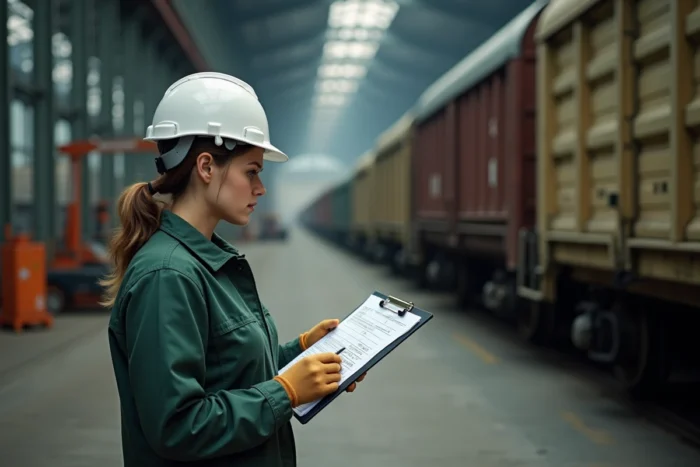
Rail safety and physical fitness: two selection filters rarely detailed
Job postings consistently mention rigor and adherence to safety protocols. They rarely specify what this concretely entails at the time of recruitment.
Swiss and German standards (equivalent to “Wagenmeister”) require psychological and physical fitness examinations before any job placement. The Swiss collective agreement for the rail sector provides for regular checks on the ability to work irregular hours, outdoors, and under high noise pressure.
In France, positions related to rail safety require a medical fitness validated by an approved physician. The wagonist works on active tracks, handles heavy couplings, and sometimes works at night. Physical fitness is not a “plus”: it is a filtering prerequisite.
- Visual and auditory acuity in accordance with regulatory thresholds for rail safety professions
- Ability to endure outdoor work in all weather conditions, including extreme cold and heat
- Stress resistance related to tight maneuvering deadlines and coactivity on sorting tracks
- Fitness for shift work (nights, weekends, holidays) verified during the hiring medical examination
These criteria eliminate a portion of candidates even before the technical evaluation. Ignoring them in a retraining project leads to dead ends.
Predictive maintenance and the wagonist’s role in freight reliability
The wagonist does not repair wagons in the strict sense. Their role is to detect defects before they cause an incident. This filtering function places the position upstream of the entire maintenance chain.
With the gradual deployment of predictive maintenance in rail freight, data collected by sensors (temperature of axle boxes, wear of brake shoes, condition of suspensions) is presented on interfaces that the wagonist consults before or during their inspection. Visual control does not disappear, but it is complemented by reading digital data.
What changes in the hierarchy of skills
An experienced wagonist can identify an abnormal noise on a bogie in a matter of seconds. This sensory expertise remains valuable. However, the ability to cross-reference this observation with sensor data allows for quicker qualification of the anomaly and transmission of an actionable diagnosis to the maintenance workshop.
The profile that is gaining value is not the pure digital technician, nor the field agent without digital skills. It is the hybrid profile: reliable technical action, smooth data reading, structured communication with supervisory teams.
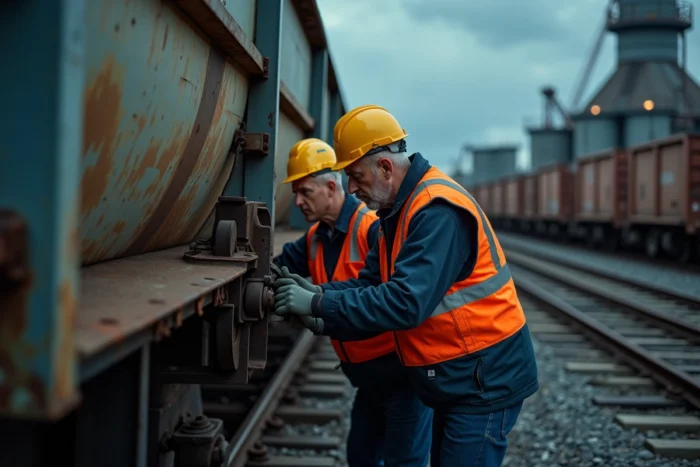
Wagonist training: accessible pathways and rail certifications
Access to the profession generally requires a CAP or a professional Bac in vehicle maintenance or transport. SNCF and private freight operators offer internal training specific to sorting operations and rail safety.
The typical pathway combines a foundation in mechanics or logistics with rail specialization acquired on the job. Certifications related to safety (electrical authorizations, rail safety certificates) complete the profile.
Continuous training is becoming increasingly important. The France 2030 diagnosis highlights the need to train field agents in digital tracking tools, which involves regular refresher modules, particularly on traffic management software and predictive maintenance interfaces.
Career advancements from the wagonist position
The position opens pathways to roles such as sorting manager, rail fleet coordinator, or specialized maintenance technician. Mastery of digital tools accelerates these transitions. A wagonist capable of writing structured diagnostic reports and participating in reliability data analysis naturally positions themselves for supervisory roles.
The wagonist profession remains rooted in technical action and safety rigor. What is evolving is the digital aspect of diagnostics and the ability to communicate reliable data. Rail freight recruiters now filter on these two axes in parallel, not one after the other.