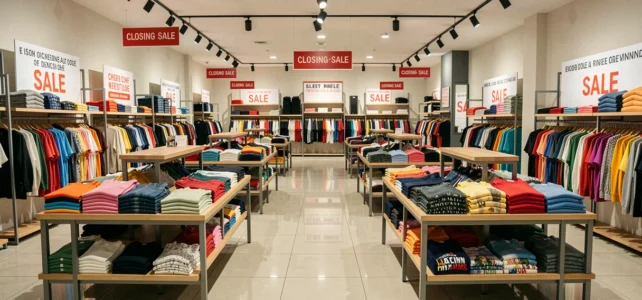
The Bershka store in Reims, located in the city center, is in its last months of operation. The Inditex group has confirmed the closure of this outlet, which adds to a series of similar departures in other French cities like Saint-Nazaire and Angoulême. For regulars of the Reims center, the question is not just why Bershka is closing, but especially what this disappearance concretely changes in the local commercial landscape.
Inditex Strategy in Reims: a store that no longer fits the new format
There is often talk of a crisis in ready-to-wear to explain this type of closure. The reality is more targeted. Inditex is not leaving France; in fact, the group has recorded record profits in recent years. What motivates the departure of Bershka in Reims is a repositioning of the network of stores.
The Spanish group has publicly explained that some stores “no longer correspond to the expression of its brands.” Specifically, Bershka is developing a new modular store concept with larger spaces and a rethought design, already tested in Spain. The small spaces in the city center, often inherited from older establishments, no longer meet these specifications.
To understand in detail the reasons for the closure of Bershka Reims, it is clear that the decision is less about a commercial failure than about a voluntary sorting within the network. The retained outlets are those that allow the deployment of the “new generation” format, with suitable surfaces and a high-traffic location.
Reims is not an isolated case. Stradivarius and Pull&Bear have already closed in several French shopping malls according to the same logic. The group is concentrating its resources on a smaller number of stores, more profitable per square meter.
Downtown Reims: the domino effect of store closures
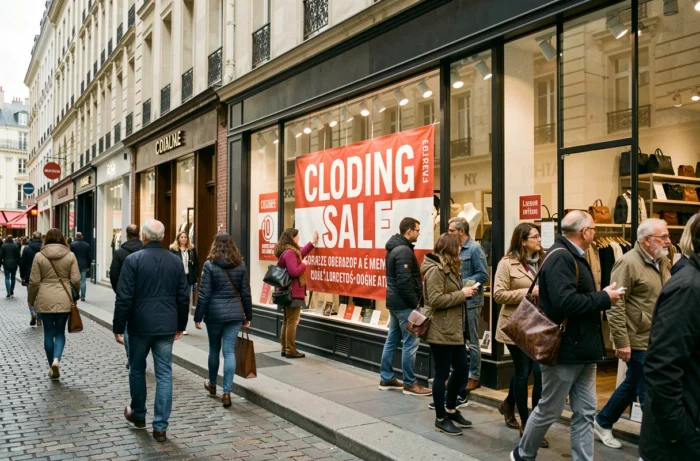
The departure of Bershka does not happen in a vacuum. The downtown area of Reims is going through a phase of commercial recomposition, with several recent closures. The Furet du Nord, located in the BHV, for example, closed its doors in July 2026. Each closure of a flagship store reduces pedestrian traffic for neighboring businesses.
The mechanism is well known to landlords and shopping center managers: when a well-known brand disappears, the foot traffic in the area decreases. Independent shops or medium-sized brands that depend on this passing traffic suffer the direct consequences.
Commercial vacancy and pressure on rents
Recent sector analyses point to a rise in commercial vacancy in French city centers. In Reims, the phenomenon is amplified by the concentration of departures over a short period. For landlords, the challenge is twofold: finding a credible replacement and, in some cases, agreeing to lower rents to attract new tenants.
A vacant space for several months sends a negative signal to brands looking for a location. This leads to a cycle where vacancy begets vacancy, unless there is proactive intervention from the municipality or property owners.
Who captures the Bershka clientele in Reims: physical stores, e-commerce, or the outskirts
The real on-the-ground question is that of purchase redirection. Customers who used to shop at Bershka in Reims will not stop consuming affordable fashion. Three channels are competing for this freed-up clientele:
- The remaining fast fashion brands in the city center, such as H&M or Primark (when it exists in the area), absorb part of the flow. Comparable pricing and geographical proximity work in their favor.
- E-commerce, particularly fast fashion platforms like the Bershka website itself or players like Shein, captures buyers accustomed to ordering online. For this clientele, the closure of the physical store changes almost nothing.
- The commercial areas on the outskirts of Reims, which have parking and a grouping of brands, attract consumers willing to drive. If a Bershka or Zara store remains in an outlying shopping center, the transfer is mechanical.
Opinions vary on this point, but it is often observed that e-commerce and the outskirts are the main winners from this type of closure in the city center. Independent shops in Reims rarely capture this clientele, whose budget and shopping habits are geared towards fast fashion.

The city center loses value to online platforms
This transfer of value is the real issue for Reims. When a customer shifts from Bershka downtown to Bershka.com, the spending leaves the territory. No commercial rent, no local employees, no property tax paid to the municipality. The same reasoning applies to orders placed on foreign platforms.
For local elected officials, the closure of Bershka Reims in 2026 raises a question of commercial policy. Attracting a new brand to the freed-up space will take time and likely require financial concessions from the landlord.
Bershka Reims Closure 2026: What It Changes for Consumers
Practically speaking, the closure means the end of trying on clothes in-store, impulse purchases while strolling down Rue de Vesle or in the shopping gallery, and the ability to return an item on-site. For some customers, especially the younger ones, this is just a detail: they were already ordering online and using the store as a pickup point.
For others, particularly those who are not used to e-commerce or who prefer to see and touch clothes before buying, the loss of a physical store remains a real disadvantage. This divide between digital shoppers and traditional buyers deepens with each store closure.
The city center of Reims has many assets to attract new businesses, but the current dynamics work against it. The closure of Bershka in 2026 is a symptom among others of a rebalancing between physical commerce, the outskirts, and digital platforms. The next occupant of the space will say a lot about the ability of the Reims center to remain attractive against these two competitors.