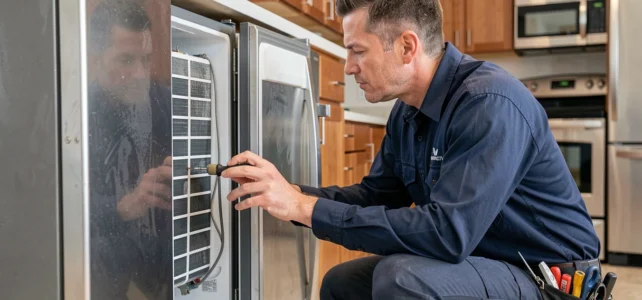
Your American fridge displays an abnormal temperature, makes unusual noises, or is leaking water on the floor. Before contacting a repair technician, a methodical diagnosis often helps identify the problem and sometimes resolve it without professional intervention. Understanding the most common symptoms saves time and avoids unnecessary expenses.
Error codes and warning signals on an American fridge
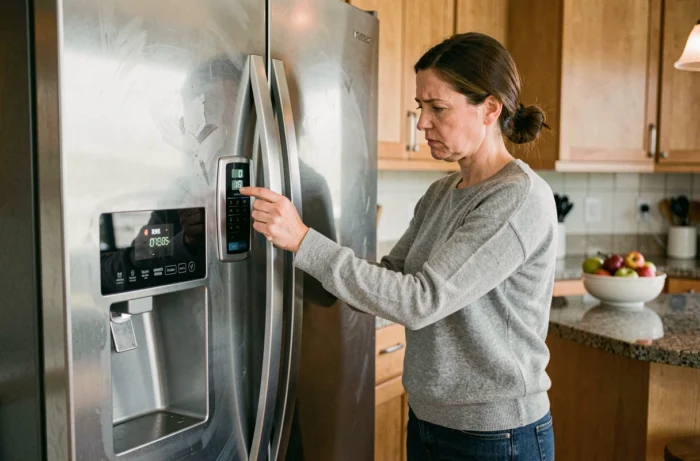
Competitors rarely mention this point, yet it is the first reflex to have. Most recent American fridges (Samsung, LG, Whirlpool) display error codes on their control panel when a component malfunctions. These codes are a goldmine for guiding the diagnosis.
For example, a flashing display or one indicating a temperature far from the set point (like +18 °C instead of 6 °C) signals a specific problem. Each manufacturer uses its own nomenclature. A code starting with “dH” in some brands points to the defrost circuit, while a code related to the fan will indicate an air circulation problem.
Note the exact code before any manipulation. Take a photo of it. This code is the key to knowing whether you can intervene yourself or if a technician is necessary. You will also find it in the technical manual of your appliance, often available online on the manufacturer’s website.
To go further in the process, you can identify a malfunction in your American fridge by following a step-by-step protocol tailored to each symptom.
Temperature rising in the refrigerator or freezer
Have you noticed that your food is no longer fresh, or that condensation is appearing inside? Temperature issues are the most common malfunction in an American fridge, and their causes are very varied.
Check the thermostat and temperature probe
The thermostat regulates the start and stop of the compressor. When it malfunctions, the compressor may run continuously or not start at all. A faulty thermostat often causes a deviation of several degrees from the displayed set point.
The temperature probe measures the heat inside the compartment and transmits the information to the electronic board. If it provides an incorrect value, the appliance adjusts its operation poorly. The result: the cooling is insufficient or excessive.
Check air circulation and the fan
An American fridge operates with a forced ventilation system. The cold air produced by the evaporator is distributed in the compartments by a fan. If this fan is blocked (by frost, an object, or a motor failure), the cold air does not circulate properly.
A compartment that no longer cools while the other one works almost always points to a fan or air distribution damper problem. Open the freezer door, listen: if no airflow is perceptible, the fan is likely the culprit.
Excessive frost and automatic defrosting problem
An American fridge includes an automatic defrosting system that prevents frost from accumulating on the evaporator. When this system fails, ice gradually takes over the interior, blocks the fan, and reduces cooling performance.
Three components work together in this circuit:
- The defrost heater, which heats periodically to melt the frost on the evaporator. If it is broken, frost accumulates within a few days.
- The thermal fuse, a thermal fuse that cuts off the heater if the temperature rises too high. Once blown, it does not reset and the defrost cycle stops permanently.
- The timer or defrost electronic board, which triggers the cycle at regular intervals. A malfunction prevents the defrosting from starting.
To check, unplug the appliance for several hours and let the frost melt. If the fridge operates normally afterward, the defrost circuit is very likely the cause.
Abnormal noise from the compressor and when to call a professional
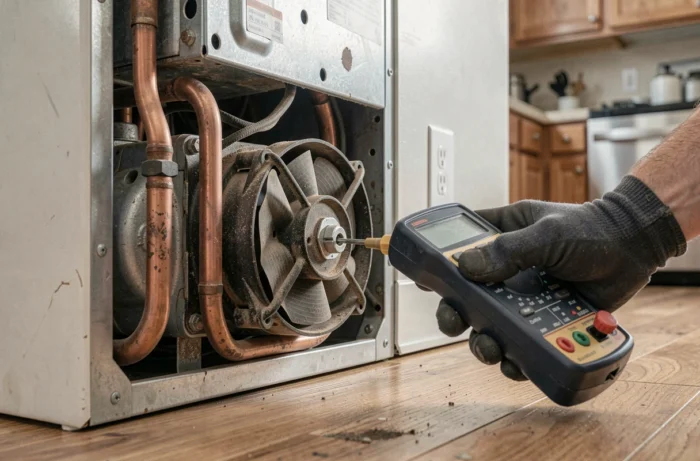
The compressor is the motor of the refrigeration circuit. It compresses the refrigerant fluid to produce cold. A properly functioning compressor emits a regular and discreet humming sound.
Do you hear repeated clicking, a loud buzzing, or unusual vibrations? A compressor that starts and then stops every few seconds often signals an electrical problem (faulty start relay) or internal overheating. The relay is a cheap and replaceable part. The compressor itself, however, represents an expensive repair.
Here are the situations where the intervention of a qualified technician becomes necessary:
- The compressor does not start at all despite confirmed electrical power.
- A refrigerant leak is suspected (oily traces, chemical smell near the circuit).
- The power board or inverter board displays a persistent error code after reset.
- The diagnosis points to several faulty components simultaneously.
Right to repair: what changes in 2026
Since July 31, 2026, the European directive on the right to repair is applicable in member states. In practical terms, you can demand the repair of your American fridge rather than its replacement, as long as the repair remains technically possible. The manufacturer can no longer discourage this option through its pricing or by refusing to supply parts.
In France, if your appliance breaks down during the two-year legal warranty of conformity and you choose repair, the legal warranty is extended by one additional year from the date of restoration. This mechanism makes repair even more financially advantageous compared to purchasing a new appliance.
In the face of a malfunctioning American fridge, diagnosis remains the first crucial step. Error code, symptom location, suspect component: each clue narrows down the possibilities. And with the new repair rules in effect, getting your appliance repaired has never been so legally protected.