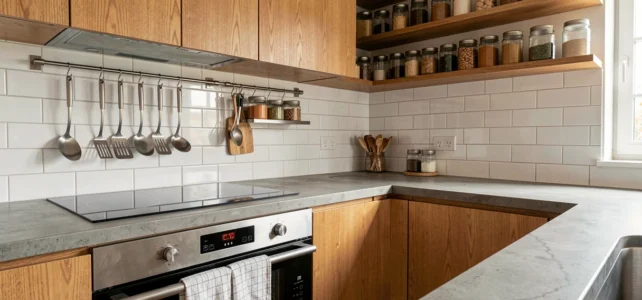
Equipping a home is not just about filling rooms with furniture and appliances. The French home appliance market is undergoing a rapid transformation, driven by product connectivity and sustainability. At the same time, energy regulations are changing the criteria for choosing heating and ventilation systems. These two dynamics are reshaping what is expected from domestic equipment in 2026.
DPE Coefficient and Electric Heating Choices: What’s Changing Since January 2026
Since January 1, 2026, the conversion coefficient for electricity in the Energy Performance Diagnosis has been lowered from 2.3 to 1.9 by an order dated August 13, 2025. This change improves the energy rating of many homes heated by electricity, without any material changes being made.
For homeowners who are equipping or renovating their homes, the consequence is direct. An electric inertia radiator or an air-to-air heat pump now produces a better DPE score than before. A home rated F with the old coefficient can shift to E, or even D, depending on the existing insulation.
This evolution makes electric equipment more strategic in a context where energy-inefficient homes rated G are gradually being banned from rental. Before choosing a heating system, checking the DPE of the home with the new coefficient helps avoid oversized investments.
By browsing Youpi La Maison’s equipment, one can gauge the extent of the categories affected by these decisions, from heating to ventilation to hot water production.
Connected and Sustainable Appliances: The Shift in the French Market
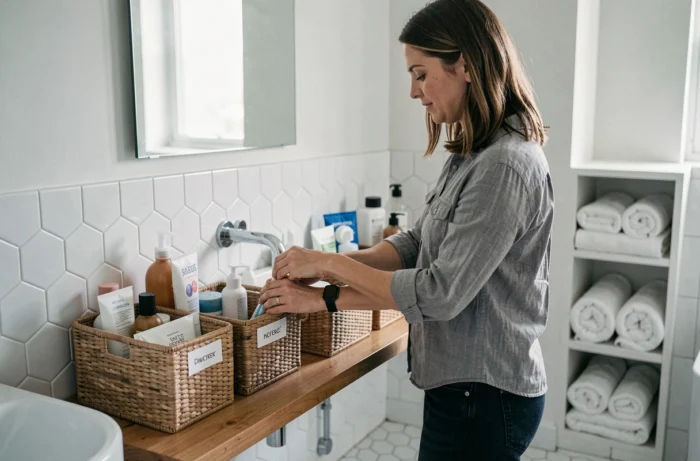
The 2025 annual report from Gifam documents a clear progression. The share of connected large appliances has increased from 11.3% in 2021 to 17.8% in 2025 in the French market. For connected small appliances, the increase goes from 6.9% to 12.3% over the same period.
These figures reflect a change in purchasing behavior. Remote control of a washing machine or oven is no longer a marginal marketing argument; it is a selection criterion for a growing share of households.
Sustainability follows the same trajectory. According to the same Gifam report, the proportion of dishwashers considered very durable (rating above 8.1/10) has risen from 37% to 51% in one year. For vacuum cleaners, the rate has gone from 46% to 52%. Demand is shifting towards repairable and long-lasting devices rather than the lowest price.
What Criteria to Check Before Purchase
- The reparability index, mandatory in France for several product categories, which rates the ease of repair out of 10. A score above 7 guarantees access to spare parts for several years.
- The actual connectivity of the device: some models offer simple consumption tracking, while others allow for complete control (smart delayed start, adaptation to off-peak rates).
- The energy class according to the new European scale, which is more demanding than the old one. A device rated C today corresponds to what was A+ a few years ago.
Storage and Circulation in Rooms: The Invisible Equipment
Online competitors provide detailed descriptions of furniture piece by piece, living room, kitchen, bedroom. In contrast, equipment related to integrated storage and circulation between spaces is rarely treated as a standalone investment.
A hallway equipped with wall cabinets along its entire length frees up several square meters in adjacent rooms. An entryway with a closed shoe cabinet, a wall coat rack, and a catch-all eliminates clutter right at the threshold of the home.
Integrated storage determines the functionality of all other rooms. A perfectly furnished living room bordered by a cluttered hallway does not provide the sought-after sense of space.
Kitchen and Bathroom Layout: Prioritizing Function
In the kitchen, the equipment that structures the space is more important than decorative accessories. A sufficiently deep countertop, fully opening drawers, and under-cabinet lighting transform daily use more than an additional multifunction robot.
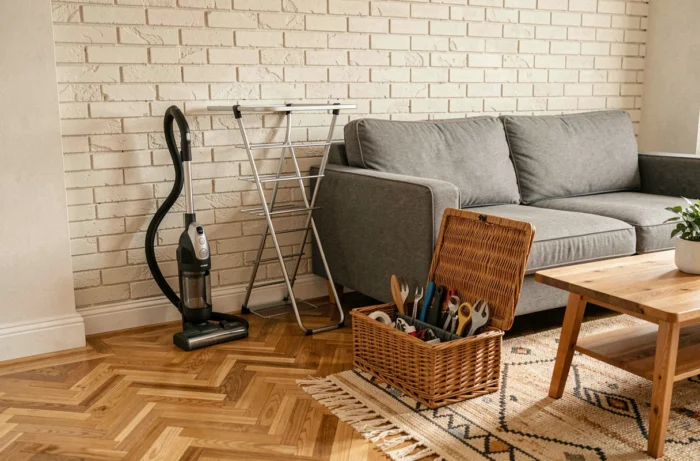
In the bathroom, a narrow storage column (less than 40 cm wide) solves a recurring problem in French homes where this room rarely exceeds a few square meters. A dry inertia towel warmer serves two functions, supplementary heating and drying, which avoids the need for an additional radiator.
Natural Light and Artificial Lighting: An Underestimated Aspect
Lighting represents a layout lever that many guides treat as a decorative detail. The reality is more technical. Poorly designed lighting degrades comfort just as much as poor heating.
For living spaces, the combination of three light sources covers most uses:
- A general lighting (ceiling light or pendant) that diffuses homogeneous light throughout the room, ideally in LED with a color temperature around 3,000 K for a warm rendering.
- A functional lighting (desk lamp, under-cabinet spots) directed towards a specific work area.
- An ambient lighting (table lamp, indirect LED strip) that modulates the atmosphere in the evening without causing glare.
In windowless rooms or hallways, a tubular skylight captures light from the roof and redistributes it inside. This type of equipment reduces dependence on artificial lighting during the day, with a direct impact on electricity consumption.
Each equipment category, from heating to lighting to storage, benefits from being evaluated based on its actual use rather than a standardized list. Equipment tailored to the precise configuration of the home is more beneficial than a high-end model that is poorly sized. Field feedback varies on this point depending on the size and age of the building, making a prior technical visit all the more useful before any structural purchase.