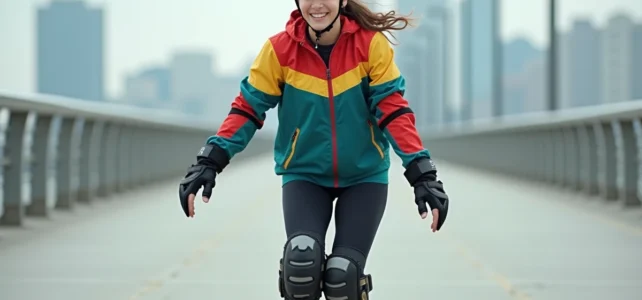
The vocabulary used to refer to roller practitioners varies according to the discipline, level, and cultural context. Skater remains the generic term in French, but it coexists with several names that reflect very different technical realities.
Technical terminology according to the roller discipline
In fitness roller or urban skating, the word skater (or patineuse) is unambiguously dominant. The French Federation of Roller and Skateboard uses this term in its official communications, licenses, and sports regulations.
In roller derby, practitioners refer to themselves as derby players or derbyists in the French-speaking community. Each player has a derby name, a tradition inherited from North American leagues. The Women’s Flat Track Derby Association and the Men’s Roller Derby Association exclusively use “skater” in their English regulations to refer to any participant on the track.
In roller hockey, we talk about roller hockey players or inline hockey players. The term skater also applies, but practitioners often prefer to associate themselves with hockey culture rather than free skating culture. In freestyle slalom or aggressive roller skating, the word rider dominates communication among practitioners.
We observe that knowing what people who roller skate are called primarily depends on the practiced discipline, as each community has forged its own lexicon.
Roller, skater, rider: language registers and contexts of use
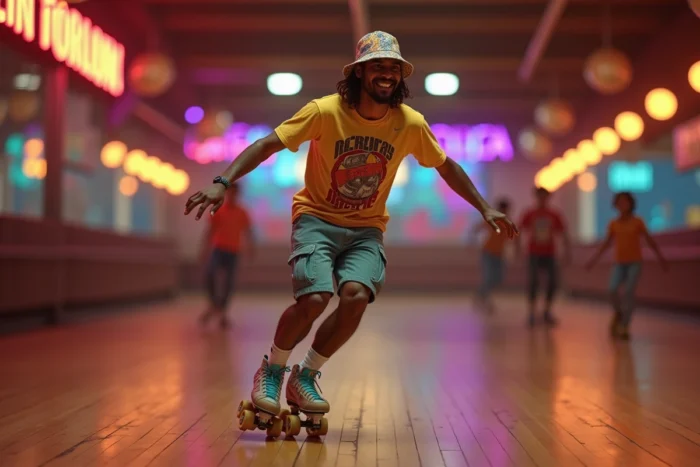
French has three distinct registers to name these practitioners, and confusing them reveals a lack of understanding of the community.
- Skater / patineuse: institutional and sports register. Used by the federation, local authorities, and mainstream media. Encompasses all roller disciplines, including artistic roller skating (roller artistic).
- Roller (noun referring to the person): common register in familiar French. “Les rollers” can refer to both the shoes and the practitioners, creating an ambiguity that insiders clarify through context.
- Rider / skater: sliding culture register, borrowed from English. “Rider” tends to prevail in local urban planning policies, where several French municipalities present their skateparks as dedicated spaces for riders, encompassing roller, skate, BMX, and scooter under one term.
The choice of term is not trivial. Saying “I am a skater” positions the practice within the regulated sports field. Saying “I am a rider” ties it to street culture and urban sliding sports. Both are correct, but they do not address the same audience.
Roller skaters: an identity that varies by country
In English, the distinction between “rollerblader” (inline skates) and “roller skater” (quad skates) structures the entire conversation. A Reddit thread on the subject shows that practitioners from non-English-speaking countries struggle to find a local equivalent that is valued, as the term “skater” is often reserved for skateboarders in common usage.
In France, this tension also exists. Inline roller practitioners distinguish themselves from quad skaters, and the names follow. Quad skating is experiencing a resurgence in popularity driven by disco roller culture and artistic skating, where the term “artistic roller skater” remains the federal norm.

In North America, roller derby culture has helped popularize the word “skater” well beyond the oval track. Derbyists present themselves as skaters in everyday life, which has broadened the term’s usage.
The particular case of the word “rollerman”
Jean-Yves Blondeau, inventor of the Buggy Rollin suit, is nicknamed Rollerman. This individual nickname is sometimes used to refer to a roller practitioner in a broad sense, but this usage remains marginal and anecdotal. It is not a term recognized by the community.
Roller and community identity: why vocabulary matters
Public events like SlowUp in France and Switzerland explicitly invite “pedestrians, cyclists, and rollers” in their communication. This formulation shows that the word “roller” now functions as an identifier of a specific audience in soft mobility and health-sport policies.
Institutional recognition goes through vocabulary. When a community writes “space dedicated to riders,” it includes skaters in a broader ecosystem. When it writes “track for rollers,” it isolates the practice. Both approaches coexist, and the lexical choice reflects a political vision of urban space as much as a sporting reality.
- In federal or competitive context: skater, patineuse, player (hockey), derbyist
- In urban or sliding culture context: rider, skater
- In public or media context: roller (for the person), skater
- In English-speaking context: rollerblader (inline), roller skater (quad), skater (derby)
The term you use to introduce yourself says as much about your discipline as it does about the community you associate with. A speed skater on the track does not identify with the word rider, just as a skatepark freestyler would never call themselves a skater without a hint of irony.
The richness of the vocabulary surrounding roller reflects the diversity of practices. Between Sunday outings, competitive derby, inline hockey, and freestyle slalom, practitioners share the wheels but not the lexicon. Choosing the right word shows that you know the terrain.