When you open your wardrobe at the start of the season and none of the pieces seem to match what you see in the shop windows, the problem rarely lies with the budget. It’s often a matter of reference points: which fashion trends are worth adopting this season, and which will remain anecdotal in three months? The autumn-winter 2026-2027 season stands out from previous seasons in several concrete ways, from the return of tweed to the emergence of bold colors in the middle of winter.
Tweed and tapered pants: soft tailoring as a wardrobe staple
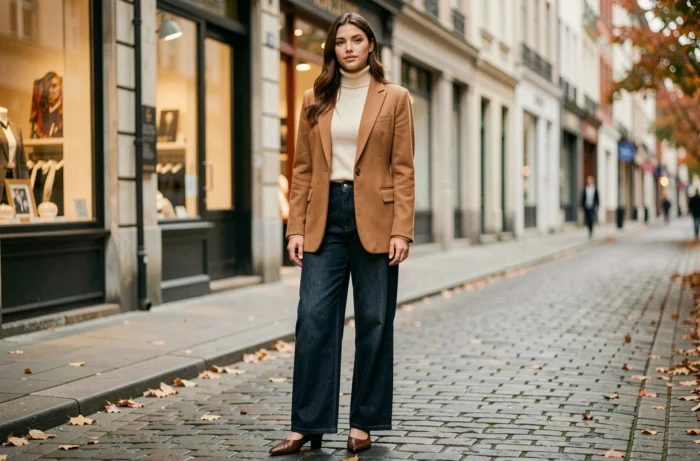
We often talk about structured pieces without specifying how to wear them daily. Tweed and tapered pants, which are on the rise on the autumn-winter 2026-2027 runways according to the Tagwalk database, are part of a movement called soft tailoring. The principle: sharp cuts but softer materials than classic tailoring.
In practice, pair a slightly oversized tweed jacket with high-waisted tapered pants, without a belt, to maintain a fluid silhouette. Tweed also works in a straight skirt worn with flat ankle boots, avoiding the overly rigid suit effect.
For those who regularly follow fashion on so-quimper.fr, this shift towards pieces that are both elegant and comfortable will not come as a surprise. Soft tailoring allows you to go from the office to dinner without changing outfits, provided you choose materials that don’t crease too easily.
One point to watch: fine tweed creases less than thick tweed. If you plan to wear it all day, it’s better to opt for an intermediate weight rather than a heavy fabric that deforms at the elbows.
Autumn colors: cobalt blue and deep red replace neutrals
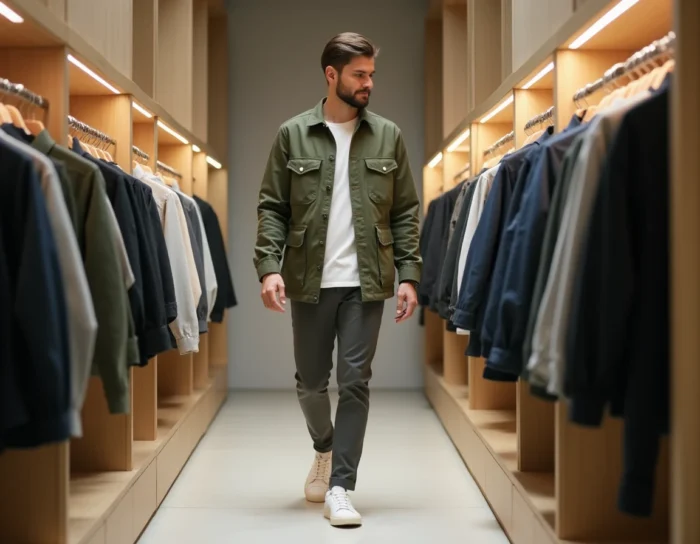
For several seasons, the winter wardrobe revolved around beige, gray, and black. This year, bold colors are making their way into the winter wardrobe. Cobalt blue, deep purple, rust orange, and bright red repeatedly appear in the autumn-winter 2026 collections, as noted by Fashion Times in September 2026.
In practice, incorporating a bright color into a winter look requires a neutral anchor point. You wouldn’t wear a rust orange coat with deep purple pants (unless it’s a deliberate choice). The working rule is:
- One strong colored piece per outfit, the rest in neutral tones (black, off-white, heather gray)
- Accessories (bag, scarf, gloves) allow you to test a color without committing the entire look
- Cobalt blue works particularly well in knitwear, whether it’s a sweater or cardigan, because the texture absorbs light and softens the flashy aspect
Reactions vary on deep purple: some skin tones wear it very well, while others find it dull under artificial lighting. Testing in natural light before buying remains a good reflex.
Maximalism and oversized accessories: how to balance without overwhelming
The “quiet luxury,” dominant for several seasons, is receding in favor of a more visible maximalism. Recent collections favor rich textures, oversized accessories, and bold colors, according to an analysis shared by Who What Wear and Edvfrance in September 2026.
In practice, poorly balanced maximalism creates a costume-like effect. The key is to concentrate the volume on a single area of the body: either the top (XXL collar, blanket scarf, statement earrings), or the bottom (voluminous skirt, chunky-soled boots), but never both at the same time.
Three combinations that work this autumn
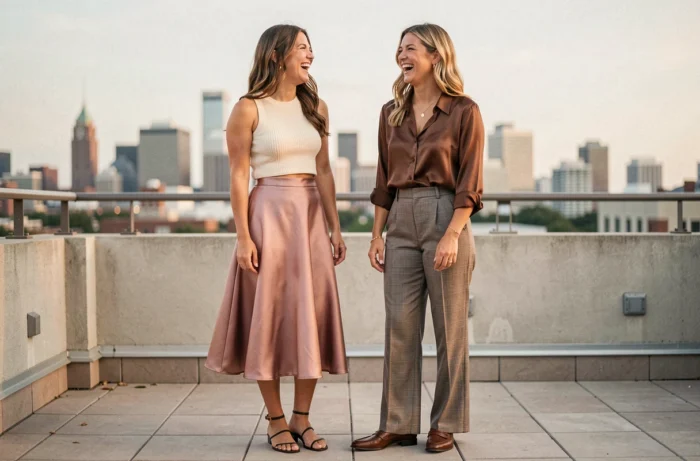
An oversized wool coat with simple straight jeans and fine ankle boots. The contrast between the volume of the coat and the sharpness of the bottom creates a natural balance.
A fluid midi dress with a wide belt and geometric jewelry. Keep the shoes understated to avoid weighing down the silhouette.
A chunky cable-knit sweater tucked into tapered pants. The volume is contained on top, while the leg remains graphic. This combination encapsulates the spirit of soft tailoring blended with maximalism that defines the season.
Subtle asymmetry: the underestimated wearable fashion trend
The analysis of over two thousand silhouettes presented at New York Fashion Week for spring-summer 2027 shows an increase in subtle asymmetry in dresses and tops. We’re not talking about dramatic cutouts, but details that add relief without sacrificing comfort: a slightly off-center hem, a more open armhole on one side, a discreet drape on one shoulder.
Subtle asymmetry allows you to make a basic piece unique. A black dress with a side drape no longer looks like a standard black dress, but it remains wearable daily. This principle can be seen in shirts with a collar that has a slight difference between the two sides, or in skirts with a slit that is offset from the center.
To incorporate this trend without overhauling your style, you can start with accessories: a mismatched earring (one long, one short), or a scarf tied on one shoulder. The gesture is simple, but it visually anchors the silhouette in the season.
Building a unique style this season: what really matters
Adopting the autumn-winter 2026-2027 fashion trends doesn’t mean buying everything at once. Tweed, bold colors, and asymmetry share a common point: they are trends that can be integrated piece by piece into an existing wardrobe.
You gain coherence by choosing a main theme for the season (soft tailoring, for example) and adding touches of color or volume according to the occasions. A unique style doesn’t come from an accumulation of trendy pieces, but from how you combine them with what you already own.