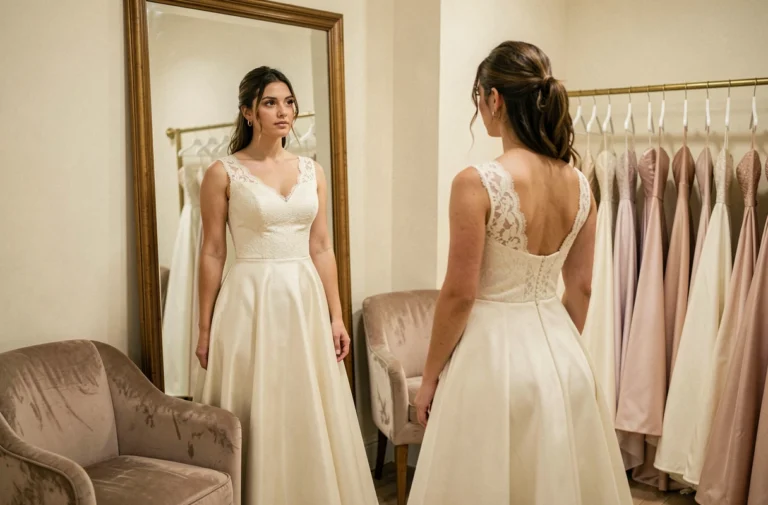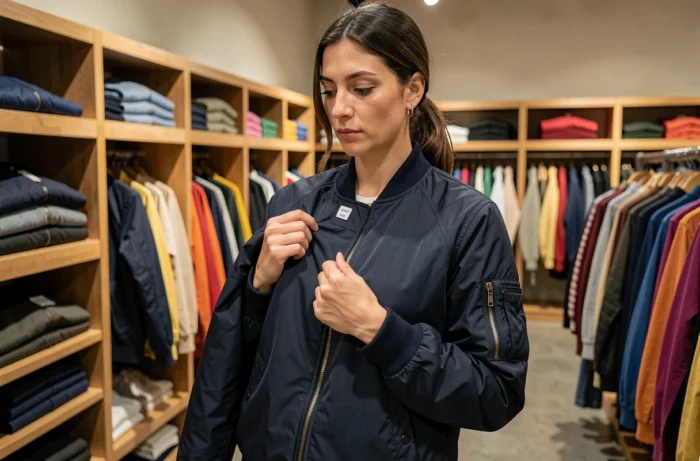
The sizes displayed on jackets vary from one brand to another, sometimes by several centimeters for the same reference. A size 48 from an Italian manufacturer does not correspond to the same measurements as a French size 48, and the S/M/L correspondences add a layer of approximation. Before discussing measurements or guides, this lack of a unique standard deserves to be noted: it explains the majority of purchasing errors, both in-store and online.
Discrepancies Between Brands: Why Jacket Sizes Are Not Reliable
No binding standard requires clothing manufacturers to have a uniform correspondence between chest circumference and labeled size. A leather jacket made in Italy often displays a size IT that is four points higher than the equivalent FR size. Outdoor brands, which account for space for mid-layers, cut wider than urban brands with a fitted cut.
The concrete result: two jackets labeled M can differ by more than ten centimeters at the bust. Field returns vary on this point depending on the segments (leather, technical fabric, denim), making any universal rule fragile.
To limit this ambiguity, the most reliable approach remains to find your jacket size based on your own measurements, then compare them to each brand’s size chart rather than relying on a usual size.
Three Key Measurements to Choose Your Jacket Size
Most size guides focus on chest circumference. This measurement is necessary but not sufficient: a jacket that fits at the bust may pull at the shoulders or float at the hips.
Chest Circumference, Shoulder Width, and Back Length
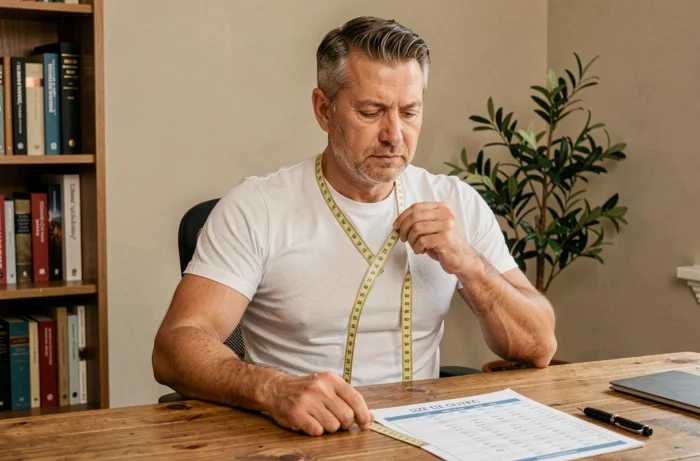
- Chest Circumference: measured in underwear, with the measuring tape placed under the armpits and around the widest part of the bust, without tightening. This is the reference measurement for determining the main size (46, 48, 50, etc.).
- Shoulder Width: horizontal distance between the two shoulder seams of a jacket that fits you well, laid flat. This measurement is rarely indicated on online guides, but it affects comfort of movement.
- Back Length: from the base of the collar to the bottom of the jacket. A jacket that is too short rides up when you raise your arms, while a jacket that is too long weighs down the silhouette.
Take these measurements in front of a mirror, with the measuring tape parallel to the ground. A difference of two centimeters is enough to go from a comfortable fit to a fit that pulls.
The Material Changes the Game
A thick leather jacket offers less elasticity than a stretch fabric. If you are hesitating between two sizes on a leather model, the larger size reduces the risk of shoulder discomfort after fastening. In contrast, on a technical fabric jacket with a percentage of elastomer, the smaller size may fit without discomfort.
The main fabric material directly affects the size choice, even with identical measurements.
Online Purchase: What the Right of Withdrawal Covers (and What It Does Not Cover)
Ordering a jacket online without trying it on exposes you to a clear risk of size error. The legal framework provides protections, but they have concrete limits that many buyers are unaware of.
For a distance purchase from a professional, the buyer generally has 14 days from receipt to notify their withdrawal, followed by an additional 14 days to return the product. However, return shipping costs may remain the buyer’s responsibility if the seller indicated this before the purchase.
Trying On Allowed Does Not Mean Normal Wear
The jacket can be tried on to check the size, but visible use, signs of wear, an odor, or removed tags can complicate the return. The refund may then be reduced.
Second-Hand and Custom-Made: Two Blind Spots
On a peer-to-peer resale platform, there is no automatic legal right of withdrawal for a size error. The return depends on the seller’s agreement. Customized or made-to-measure jackets also fall outside the standard right of withdrawal.
A jacket received in a different size than ordered falls under a different regime: it may be considered a non-conformity, and return shipping costs may then be the seller’s responsibility. The distinction between “wrong size choice” and “size not conforming to the order” is significant.
In-Store Fitting Method: Actions That Avoid Returns
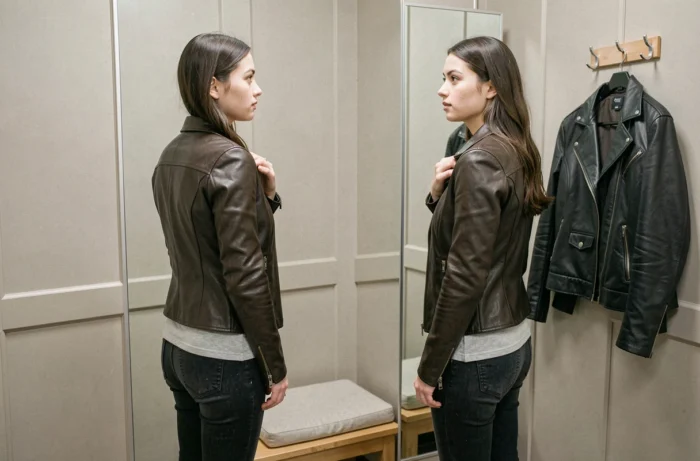
Even in-store, a size error remains common if the fitting is limited to putting on the jacket and looking at oneself from the front.
Zip up or button the jacket, then raise your arms above your head. If the bottom of the jacket rides up above the waistband, the length is insufficient for your body type. Take a few steps: the pockets should not gape, and the back should neither pull nor wrinkle.
Wear the clothes you will pair with the jacket during the fitting. A thick sweater under a fitted jacket can turn a correct size into a size that is too tight. If you are buying a winter jacket, try it on with a mid-layer, not just a t-shirt.
Comfort at the shoulders takes precedence over aesthetics: a shoulder seam that drops onto the arm indicates a jacket that is too big, while a seam that compresses the upper arm indicates a jacket that is too small. Neither of these can be corrected with a simple alteration.
The size of the jacket remains a compromise between fit, material, and use. A size chart provides a starting point, not a definitive answer. Cross-referencing your actual measurements with the specific brand guide, checking the material, and trying on in real wearing conditions: these three steps reduce errors more effectively than any size conversion rule.