Between the shape of a weighted head, the weight of a rig, and the seasonal adaptation of fishing spots, the parameters that separate a productive fishing session from a disappointing outing are often technical. This article compares the criteria for selecting equipment and the strategic adjustments that truly impact the results at the water’s edge.
Shape of the weighted head: a more decisive criterion than weight alone
The rule of thumb to choose about one gram per meter of depth remains an acceptable starting point. However, it is not enough to ensure a good presentation of the lure.
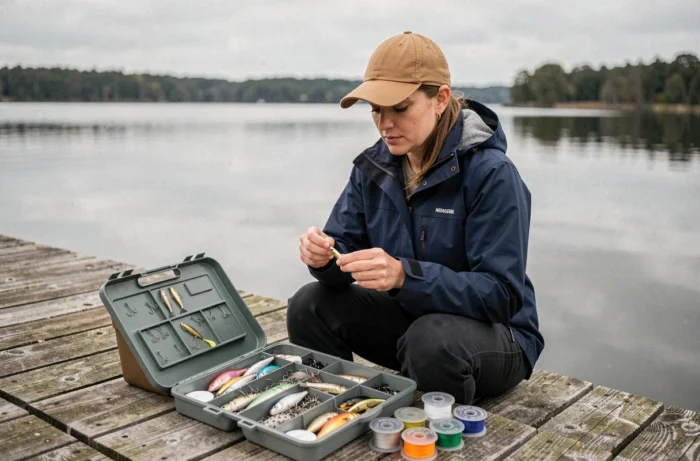
According to Pêcheur.com (September 16, 2026), the shape of the weighted head modifies the behavior of the lure as much as its weight. A round head offers a steady vertical descent, suitable for calm areas. A “football” type head stabilizes the soft lure on uneven bottoms, while a flat head promotes erratic movements in the current.
In practice, two heads of the same weight but different shapes do not explore the same water column, nor at the same speed. The current amplifies this difference: in a fast flow, a streamlined head sinks diagonally while a flat head slows down and glides. Adapting the shape to the fishing spot allows the lure to stay in the fish’s activity zone longer without having to increase the weight and burden the line.
Specialized catalogs available on angelsport.be facilitate the comparison between geometries of weighted heads and weights for each lure technique.
Comparison of types of weighted heads according to the fishing spot
| Head Shape | Descent | Suitable Environment | Typical Animation |
|---|---|---|---|
| Round | Vertical, steady | Calm water, pond, lake | Slow linear, vertical |
| Football (flattened oval) | Stable, resists tipping | Hard bottom, gravel, rocky areas | Scraping the bottom, short pull |
| Flat (sabot) | Slowed, gliding | Moderate current, river | Erratic, sawtooth swimming |
| Darter (tapered) | Fast, little resistance | Deep water, strong current | Vertical jigging, fast pull |
This table highlights a often overlooked point: the same soft lure associated with two head shapes produces two radically different animations. Before adding weight to reach the bottom, testing another geometry can solve the presentation issue.
Seasonal adjustments for carp fishing at the end of summer
Sticking to the same spot, the same bait, and the same session times from month to month is a common mistake. As September approaches, the behavior of carp changes significantly.
Pêcheur.com (September 4, 2026) emphasizes that observing fish movements replaces the routine of fixed spots during this time. Carp gradually leave the shallow areas they occupied in the height of summer to move closer to deeper sectors or intermediate structures.
Three concrete adaptation levers
- Change fishing times: activity windows shift to early morning and late afternoon, with shorter feeding phases than in July.
- Adjust the baiting area: reduce the amount of bait and target transition spots (breaks, edges of holes) rather than summer shallows.
- Observe before casting: spotting surface disturbances, bottom bubbles, and fish jumps helps locate the active zone of the day instead of settling by habit.
This approach requires dedicating the first half-hour of the session to pure observation, without setting up a line. It is a time investment that reduces the hours spent at an empty spot.
Preservation of waterways and choice of fishing spot
The choice of a fishing location is not limited to its fishing potential. The French Office for Biodiversity (OFB) conducts characterization efforts of small headwater streams, areas particularly sensitive to human pressure.
For an angler, this means checking the fragility of the environment before choosing access. Headwater streams often host populations of wild trout or heritage species whose reproduction depends on substrate quality. Treading on banks, parking a vehicle too close, or heavily baiting in these fragile environments can degrade a habitat in just a few outings.
Before scouting a new spot, consulting local prefectural orders and ecological sensitivity maps remains the most reliable precaution. This step takes a few minutes and avoids both a fine and unintentional degradation.
Rigging and basic equipment: the choices that really matter
Competitors extensively detail rods, reels, and lines. Three points deserve particular attention because they generate the most beginner errors.
- The hook suited to the size of the bait: a hook that is too large reduces the number of bites, while a hook that is too small increases the chances of losing fish. The bait-hook match takes precedence over brand or price.
- The diameter of the main line: a line that is too thick stiffens the rig and makes the presentation look artificial, especially in clear water. Dropping by a hundredth can be enough to trigger bites from wary fish.
- The fluorocarbon leader: its near invisibility in water compensates for its higher cost compared to standard nylon, particularly for lure fishing in ponds or slow rivers.
Investing in a good unhooking tool and a fine-mesh landing net protects the fish and speeds up the release. These are two inexpensive accessories that make a measurable difference in the survival rate of released catches.
The most expensive equipment never compensates for a poor choice of spot or a careless presentation. A fine rig, well adapted to the environment, surpasses poorly utilized high-end equipment. This is the takeaway from every comparison between productive sessions and blank outings.