
Socks that compress the foot or leave a red mark around the ankle pose a real problem. The discomfort is not just aesthetic: a too-tight elastic can hinder venous circulation and cause sensations of heavy legs, tingling, or swelling at the end of the day.
Before throwing away a pair, there are several methods to soften the fibers and regain a comfortable fit, provided you understand what is happening at the textile level.
Elastane and heat: why socks tighten after washing
Most socks sold today contain a percentage of elastane (often marketed under the name Lycra). This synthetic thread provides elasticity, but it has an enemy: repeated heat. Each cycle in the dryer gradually breaks down the elastic fiber.
The result is paradoxical. One might think that a damaged fiber would relax. In reality, heat first contracts the stitches before weakening them, resulting in a sock that is both tighter and less durable. The cotton or wool surrounding the elastane can also shrink due to washing in water that is too hot, worsening the compression.
Care recommendations for technical textiles are clear on this point: limit or even eliminate the dryer and favor air drying. When wishing to widen overly tight socks, the first step often involves correcting washing habits even before attempting stretching.
Stretching on a cylinder: the most reliable method for widening socks
Among the techniques circulating online, stretching on a cylindrical object stands out for its simplicity and effectiveness. The principle is straightforward: insert an object slightly wider than the ankle or calf into the sock, then let the fiber relax for several hours.
Choice of support and setup
A glass jar, a plastic bottle with a narrow neck, a roll of paper towels, or even a can can serve as a template. The diameter of the support should exceed that of the area that is tight, but not excessively so as to avoid distorting the entire sock.
- Moisten the sock with lukewarm water (not hot) before slipping it onto the support. The moisture temporarily softens the fibers and allows for a more even stretch.
- Position the cylinder at the exact spot that is problematic, usually the upper edge or the instep area.
- Let it air dry for at least six to eight hours, ideally overnight. The fiber takes the shape of the support as it dries.
This method targets the compression area without altering the rest of the sock. The widening remains localized, preserving foot support.
Adding a fabric softener or white vinegar
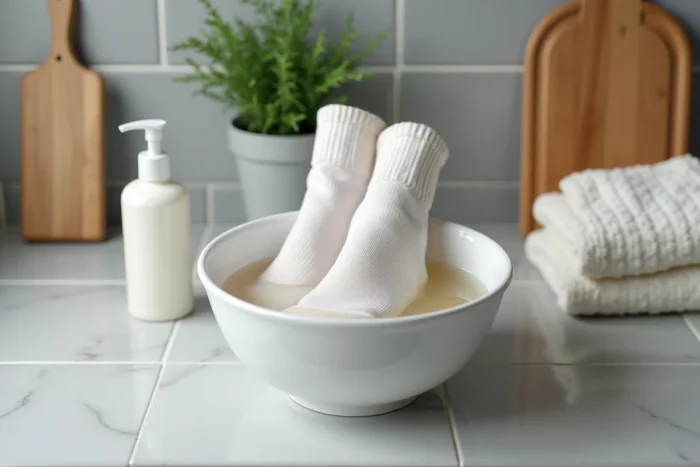
Soaking the sock in lukewarm water mixed with a bit of fabric softener or white vinegar before stretching helps the fibers relax further. White vinegar acts as a natural softening agent on wool and cotton, without leaving any aggressive chemical residue. A few tablespoons in a liter of lukewarm water is sufficient.
The softener relaxes the fibers without weakening them if the soaking is kept short, around twenty minutes. Beyond that, an excess of product can clog the stitches and reduce the breathability of the fabric.
Moderate heat from a hairdryer: complementary technique for the elastic
When the compression specifically comes from the elastic edge, a hairdryer set to medium heat can help. Slip the sock onto the chosen cylinder, then direct warm air onto the elastic band for one to two minutes. Moderate heat relaxes the elastane without destroying it, provided you do not insist for too long or increase the temperature.
This process is adapted from a technique used to soften elastic belts on pants: gradual stretching on an appropriately sized object, combined with a gentle heat application. On a sock, the effect is the same. An iron or direct steam application, however, risks burning the synthetic fibers, making the elastic brittle.
Manual stretching after washing: simple gestures and limits of the method
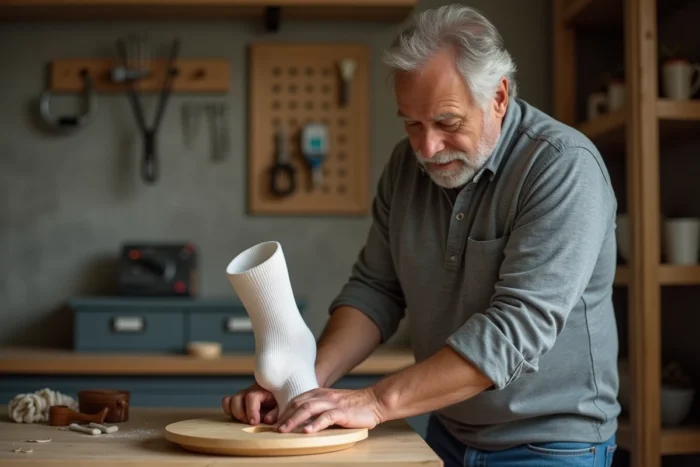
The most common technique remains manual stretching, just after washing, when the fibers are still damp. Gently pull the sock widthwise, focusing on the areas that compress. It’s quick, but feedback varies on the durability of the result.
On thick cotton, manual stretching provides a noticeable widening that lasts several wears. On thin socks containing a lot of elastane, the elastic fibers often return to their original shape after one or two washes. Thus, the method works better as regular maintenance than as a definitive solution.
To maximize the effect, combine manual stretching with flat drying, laying the sock out well spread on a towel. Avoid hanging it by the elastic edge, which concentrates tension in the wrong place.
Materials and weaving: what determines the widening margin
Not all socks respond the same way to stretching. The result largely depends on the textile composition and the type of knit.
- Cotton and wool stretch well when wet and retain some of the deformation after drying. These are the easiest materials to work with.
- Polyester and nylon resist deformation more. They return to their original shape more quickly, limiting the effectiveness of manual methods.
- Elastane, even in low proportions, dominates the elastic behavior of the sock. The higher the elastane content, the more temporary the widening will be.
Before attempting anything, checking the composition label gives a reliable indication of the chances of success. A predominantly cotton sock with little elastane will widen more easily and durably than a technical model with high compression.
If despite several attempts the sock remains uncomfortable, the problem likely stems from an inappropriate size at the time of purchase. No stretching method compensates for a size discrepancy that is too significant, and forcing beyond reasonable limits eventually deforms the knit to the point of rendering the sock unusable.