The choice of a paint color for a concrete pool is not limited to aesthetic preference. The color of the coating alters the perception of depth, the brightness of the water, the visibility of deposits, and even the time required to refill after application. Comparing these parameters before purchasing a can helps avoid costly disappointments.
Light, medium, or dark shades: what each range concretely changes
Competing guides often present colors one by one. Grouping shades by value family (light, medium, dark) allows for a clearer visualization of the differences based on the criteria that matter in daily use.
| Criterion | Light shades (white, sand, pearl gray) | Medium shades (sky blue, medium gray, water green) | Dark shades (cobalt blue, anthracite gray, black) |
|---|---|---|---|
| Visual rendering of the water | Bright water, turquoise reflections in full sun | Vibrant blue water, good visibility of the bottom | Deep water, mirror effect, bottom not very visible |
| Visibility of deposits and limescale | Very visible, frequent cleaning needed | Moderate, acceptable compromise | Low, masks variations in the substrate |
| Visible application defects | Yes, every irregularity stands out | Partially masked | Well masked by pigment saturation |
| Heat absorption | Low, cooler water | Medium | High, may extend the swimming season |
| Perception of depth | Pool appears less deep | Perception true to reality | Illusion of greater depth |
This table shows that the choice involves much more than just a matter of taste. A light shade on a pool with a substrate that has micro-irregularities will expose every flaw to view.
To delve deeper into the topic of paint color for concrete pools, it is also necessary to consider the type of resin used, as not all formulations offer the same color ranges.
Interaction between paint color and pool environment
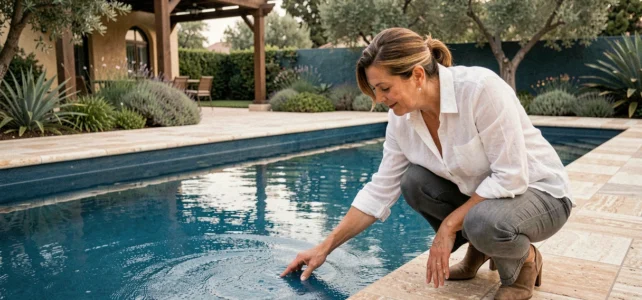
The same cobalt blue will not produce the same water rendering depending on whether the pool is surrounded by light stone coping, a dark wood deck, or dense vegetation. The immediate environment alters the perception of the shade as much as the pigment itself.
Reflection of the sky and sunlight
A pool facing directly south, without any shade, receives direct light that brightens the perceived color of the water. In contrast, a pool partially shaded by trees or a wall will yield darker water, regardless of the chosen coating.
Overcast skies pull shades toward gray. A sand or beige paint, chosen for its warm aspect, may appear dull under a low sky. Medium blue shades remain the most visually stable from one weather condition to another.
Beach materials and coping
Light travertine coping naturally pairs well with blues or pearl grays. A dark composite wood deck better supports a dark paint without creating a harsh contrast. Sand or ivory shades work well with natural golden stone, common in the south of France.
Color and type of pool resin: the constraints of the color range
The choice of color also depends on the paint technology selected. Not all resins cover the same spectrum of shades, and some colors age differently depending on the formulation.
- Acrylic paints generally offer the widest color range, sometimes more than ten RAL colors, but their durability remains the shortest on the market.
- Two-component epoxy paints provide high resistance to chlorine and a glossy finish, but the choice of shades is often limited to a few references (white, blue, gray).
- Polyurethanes combine film flexibility and good pigment retention, with an intermediate color range and compatibility with salt or bromine treatments.
Choosing a dark shade in acrylic exposes it to faster lightening than with a polyurethane resin. Dark pigments place more demand on the binder under UV effects. This phenomenon is less pronounced in two-component formulations.
Refilling time and color: an unknown link
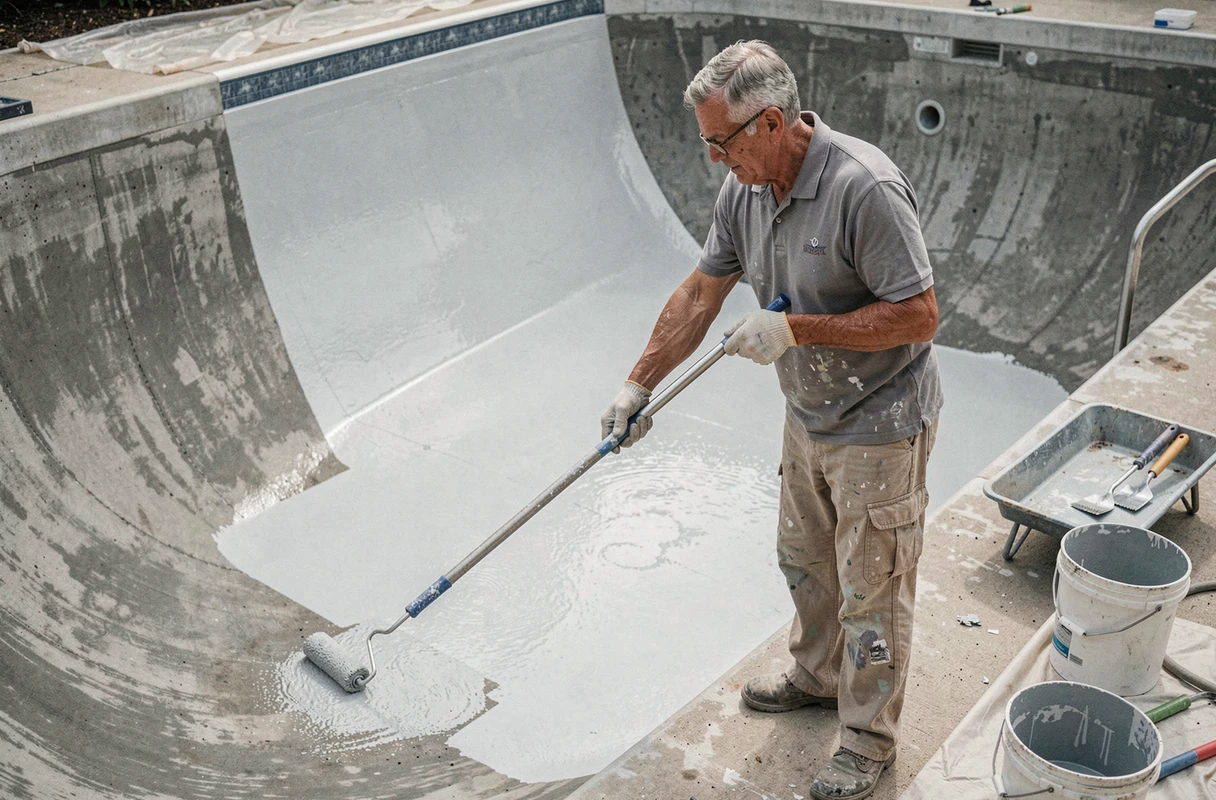
A specialized manufacturer indicates a delay of 7 to 14 days before filling depending on conditions and the chosen shade. Darker colors, which are richer in pigments, may require slightly longer drying times for the film to reach its optimal hardness.
This parameter often goes unnoticed during purchase. A pool painted at the end of May with an anthracite shade that requires two weeks of drying delays the pool opening to mid-June. With a lighter shade that dries faster, the schedule can gain several days.
Application conditions not to be neglected
Outdoor temperature and relative humidity weigh as heavily as color on drying time. Applying in cool or humid weather extends the delay, regardless of the shades. Painting between 15 °C and 30 °C remains the recommended range by most manufacturers to ensure proper polymerization.
Visual maintenance according to the chosen pool shade
Very light shades make deposits, limescale marks, and application irregularities more visible. This observation, documented in recent product sheets, guides the choice toward intermediate shades for owners who do not wish for overly frequent cosmetic maintenance.
Conversely, dark shades mask substrate defects but reveal more the waterline and greasy residues on the surface. The most common compromise remains a medium blue or light gray, which tolerates maintenance discrepancies without too much revealing imperfections.
The final choice rests on a balance between the desired water rendering, acceptable maintenance frequency, type of resin selected, and refilling schedule. An owner who cross-references these four criteria with the comparative table above significantly reduces the risk of regretting their shade after filling.