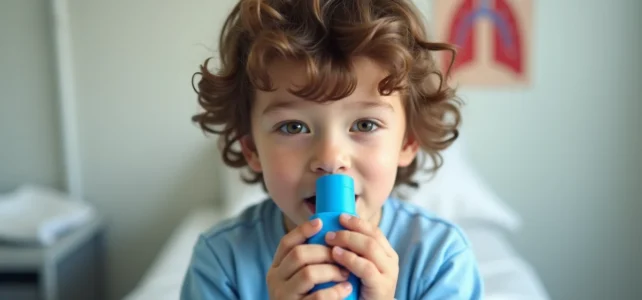
Asthma is a chronic inflammatory disease of the bronchi that affects about 15% of children. The bronchi swell, produce more secretions, and constrict, which hinders airflow and causes coughing, wheezing, and shortness of breath.
Allergic asthma in children: the central role of the home environment
About 85% of asthma cases in children are allergic in origin. Dust mites, pollen, pet dander, mold, and household chemical irritants are the main triggers on a daily basis. This high proportion means that asthma management relies as much on controlling the environment as on medication.
In practice, indoor air often contains more allergens than outdoor air. Scented household products, candles, oil diffusers, and air fresheners release volatile organic compounds that irritate the bronchi of an asthmatic child. Favoring unscented products and ventilating the house daily (outside of pollen peaks) reduces this irritating load.
To better understand asthma in children, it is essential to first identify which specific allergens trigger the symptoms. An allergy assessment, conducted by a pediatric allergist, helps target avoidance measures instead of indiscriminately removing everything.
Concrete avoidance measures at home
- Dust mite covers on the child’s mattress and pillow, washed at 60 °C at least every two weeks
- Regular vacuuming with a HEPA-filter vacuum cleaner, focusing on the bedroom
- Limiting stuffed animals on the bed (freezing them for 24 hours kills dust mites, then wash them)
- No indoor drying of laundry, as humidity promotes mold

Sleep disorders and childhood asthma: an underestimated vicious circle
Asthma frequently disrupts children’s sleep. Symptoms worsen at night, partly because the lying position and cooling of the inhaled air promote bronchospasm. A child who coughs at night sleeps poorly, and a child who sleeps poorly manages their asthma less well the next day.
Allergists report that worsening allergic diseases can cause sleep apnea in children. The resulting daytime fatigue leads to concentration difficulties, increased irritability, and, in some cases, significant academic impact. This link between asthma, sleep, and school performance is rarely discussed with families.
Monitoring sleep quality provides a good indicator of asthma control. A child who wakes up more than two nights a week due to coughing or respiratory discomfort has poorly controlled asthma, even if the days seem normal. This signal should prompt a review of the maintenance treatment with the doctor.
Asthma action plan: the tool every parent should master
The action plan is a written document, created with the doctor, that specifies exactly what to do according to the level of symptoms. It generally operates in three zones, often color-coded.
- Green zone: the child is well, breathing normally, can play sports. The maintenance treatment continues as is
- Orange zone: frequent coughing, wheezing, nighttime awakenings. The plan specifies which rescue medication to use, at what dose, and for how long before consulting
- Red zone: marked shortness of breath, difficulty speaking or walking, bluish lips. Call 15 (emergency services) without delay
This plan is not only for parents. It should be shared with the school, cafeteria, leisure center, and anyone who cares for the child. An asthmatic child must have access to their rescue bronchodilator at all times, including during school sports.
Inhalation chamber: technique is as important as the medication
In children under six years old, a metered-dose inhaler alone is not sufficient. The medication remains in the mouth and throat instead of reaching the bronchi. The inhalation chamber with a face mask solves this problem by creating a reservoir in which the child breathes normally for several cycles.
Regularly checking that the child is using their inhalation chamber correctly is part of the follow-up. Poor technique reduces the effectiveness of maintenance treatment and gives the impression that the medications are not working, when the issue is mechanical.

Physical activity and asthma in children: adapt without restricting
Asthma does not prohibit sports. On the contrary, regular physical activity improves respiratory capacity and exercise tolerance in asthmatic children. Swimming, cycling, and brisk walking are particularly suitable because they gradually engage the breath.
Exercise-induced asthma, which manifests as coughing or wheezing during or just after intense exercise, affects a significant portion of asthmatic children. It is managed by taking the rescue bronchodilator about fifteen minutes before exercise and following a gradual warm-up. Cold and dry air amplifies this phenomenon, which explains why attacks occur more often in winter or in ice rinks.
Limiting a child in their physical activities for fear of an attack has the opposite effect: deconditioning, weight gain, social isolation. Informing teachers and sports coaches of the diagnosis and providing them with the action plan allows the child to participate safely.
Asthma remains the leading cause of school absenteeism in children. Regular medical follow-up, a sanitized home environment, and a shared action plan with those around them form the foundation for effective daily management. A child whose asthma is well controlled leads a normal life, runs, sleeps, and learns like others.